Everything runs on every change
No test selection strategy means tiny changes trigger full-suite execution.
If feedback arrives after context is lost, quality drops. This page shows how to restore fast, trusted pipeline flow.
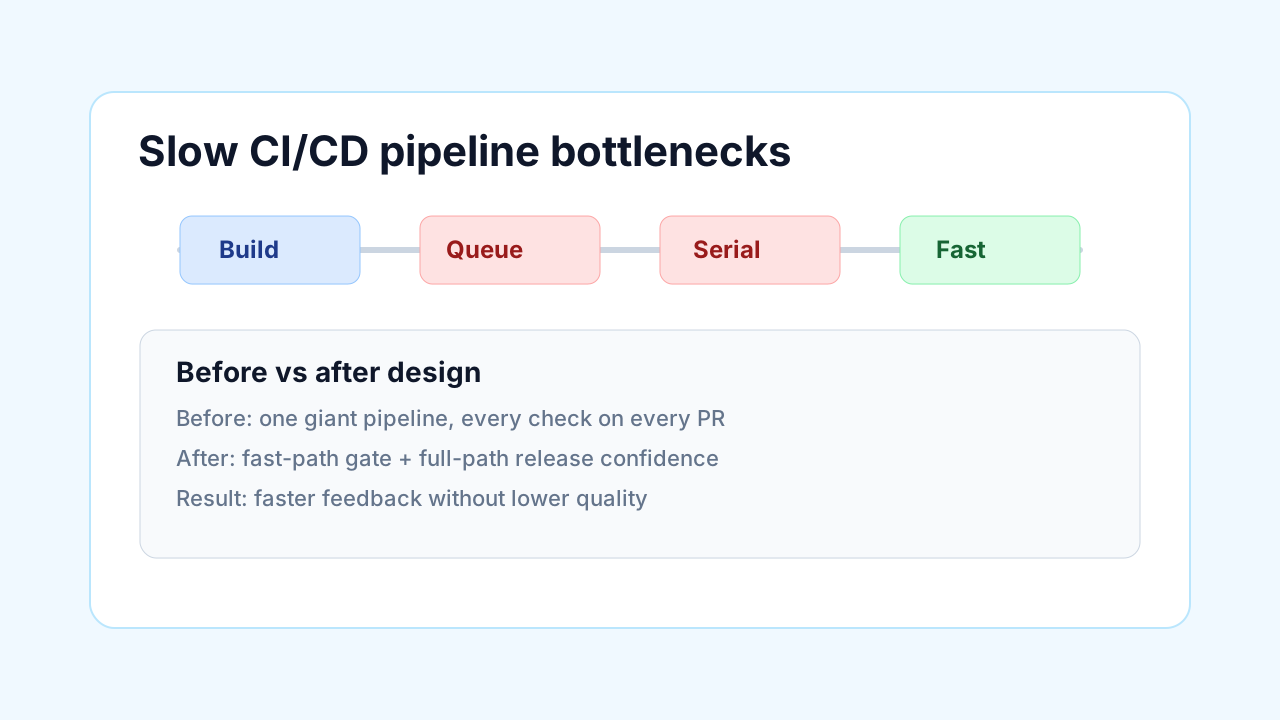
Pipelines take 30-60 minutes before developers see useful feedback.
Single failing suites block all merges regardless of impact scope.
Teams skip checks or batch risky changes to avoid slow cycles.
Pipeline performance becomes a constant complaint but no clear optimization plan exists.
No test selection strategy means tiny changes trigger full-suite execution.
Build, test, and verification jobs are chained linearly where safe parallelization is possible.
Inefficient caching and repeated setup inflate runtime every run.
Developers wait for long, release-level checks even for early pull-request feedback.
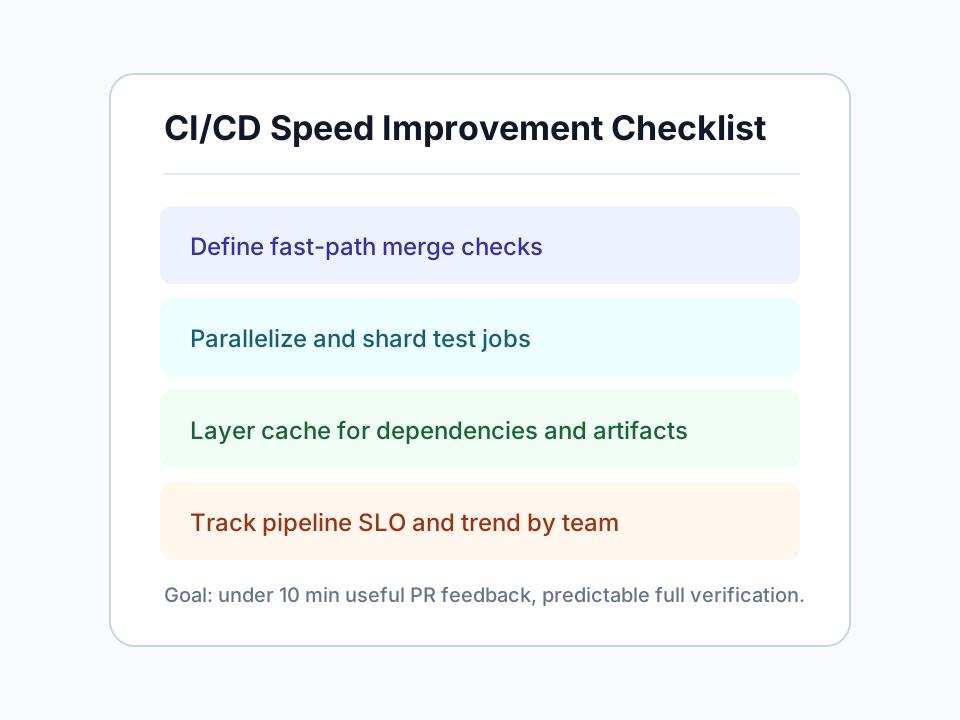
Create a fast merge-gating path and a deeper release-confidence path, each with explicit objectives.
Use deterministic sharding and worker pools to reduce wall-clock time while preserving signal quality.
Cache dependencies, build outputs, and test artifacts independently to avoid expensive rework.
Set target durations and publish trends so optimization remains part of engineering governance.
Most teams do not need more tooling. They need clearer execution order, stable patterns, and ownership around reliability.
A fast pipeline is not just shorter runtime. It is a decision system where each stage answers one clear release question.
When stages overlap in purpose, teams wait longer and trust results less. Separate fast gating from full verification.
Start with measurement, then remove serial bottlenecks, then improve test selection, then improve compute.
This sequence delivers predictable improvements and avoids expensive infrastructure overprovisioning.
If these issues are affecting delivery speed or release confidence, we can map a practical execution plan for your setup.
For most product teams, under 10 minutes for core merge feedback is a strong target. Full release verification can be longer but should be predictable.
Not if the sharding strategy is deterministic and reporting is consolidated. Done right, sharding increases speed without reducing confidence.
Usually not. Most gains come from pipeline architecture, execution strategy, and caching before major test rewrites are needed.
Tests pass locally, fail in CI, and nobody trusts the suite. This page shows how to stop the randomness.
If one person owns all framework knowledge, delivery risk grows every sprint. This page shows how to reverse that.
If environment drift keeps invalidating results, your tests are not the main problem. This page explains the fix.