Configuration drift
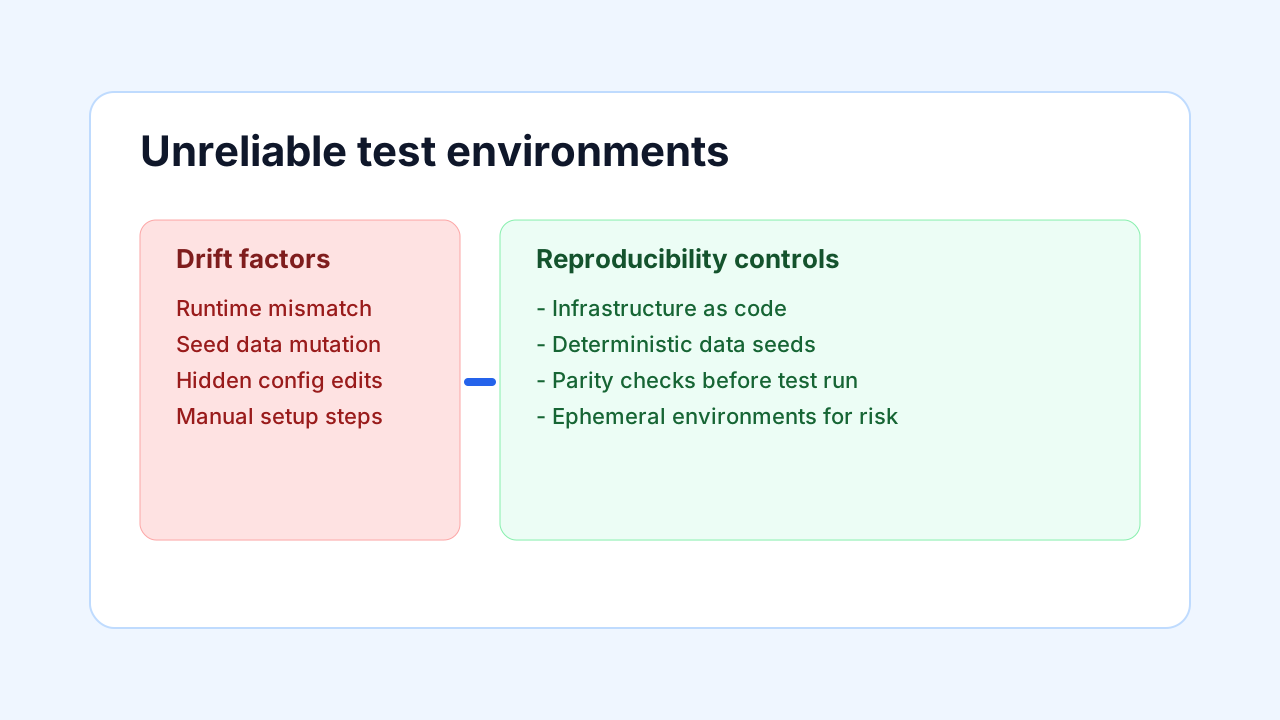
Runtime, dependencies, feature flags, and infrastructure settings diverge over time without visibility.
If environment drift keeps invalidating results, your tests are not the main problem. This page explains the fix.
The same test passes in one environment and fails in another.
Staging behavior changes unexpectedly between runs.
Teams spend more time investigating setup differences than product defects.
Release confidence depends on who prepared the environment manually.
Runtime, dependencies, feature flags, and infrastructure settings diverge over time without visibility.
Shared mutable datasets cause run-to-run behavior differences that appear as test instability.
Undocumented manual steps create hidden variability and reduce reproducibility.
Pipelines start running tests without verifying preconditions, so failures arrive too late.
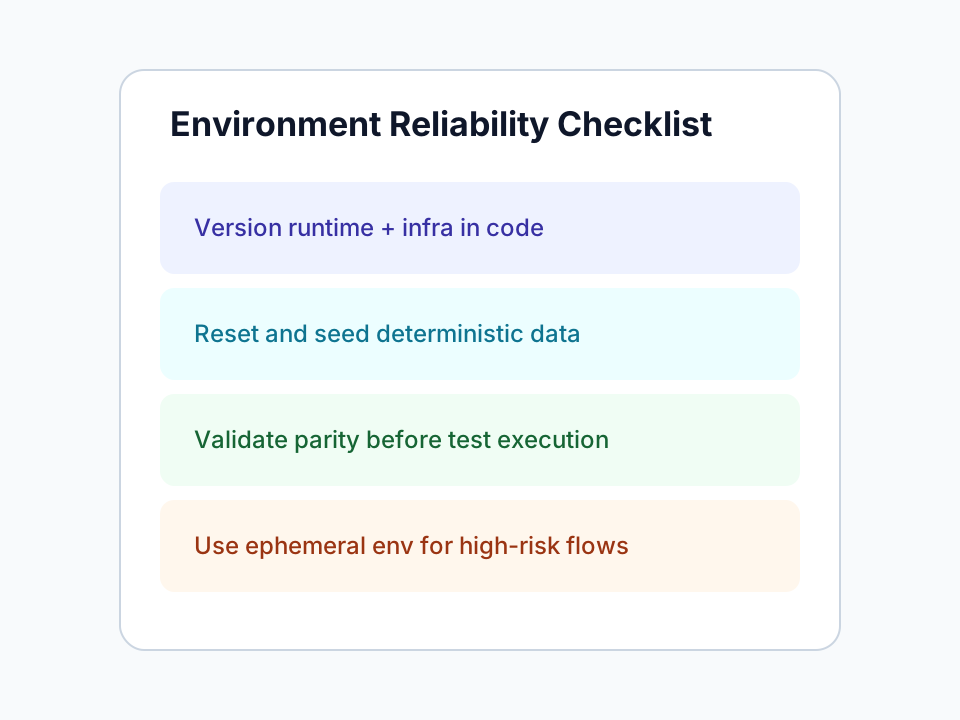
Use Docker and infrastructure-as-code to create repeatable runtime and dependency baselines.
Reset and seed deterministic data per run, and isolate mutable state by scenario.
Verify critical runtime/version/config values at pipeline start before running expensive suites.
Spin isolated temporary environments for high-impact changes to prevent shared-state contamination.
Most teams do not need more tooling. They need clearer execution order, stable patterns, and ownership around reliability.
A reliable environment is defined by explicit contract: runtime versions, service dependencies, seed data shape, and observability endpoints.
When this contract is versioned and verified, test outcomes become comparable and defensible.
Start with parity checks, then deterministic data, then ephemeral paths for critical journeys. Each step reduces uncertainty and troubleshooting cost.
This model scales from small teams to large multi-service delivery organizations.
If these issues are affecting delivery speed or release confidence, we can map a practical execution plan for your setup.
No. Reliability comes from reproducibility and validation. Many teams get major gains with Docker + infrastructure-as-code before platform complexity is needed.
QA should own test-environment requirements and validation, while partnering with platform teams on shared infrastructure standards.
For low-risk checks maybe, but for high-impact changes you should use isolated or ephemeral environments to prevent cross-team interference.
Tests pass locally, fail in CI, and nobody trusts the suite. This page shows how to stop the randomness.
If feedback arrives after context is lost, quality drops. This page shows how to restore fast, trusted pipeline flow.
If one person owns all framework knowledge, delivery risk grows every sprint. This page shows how to reverse that.