Shared and mutable test data
Tests depend on records created by other tests, so order and timing change outcomes.

Tests pass locally, fail in CI, and nobody trusts the suite. This page shows how to stop the randomness.
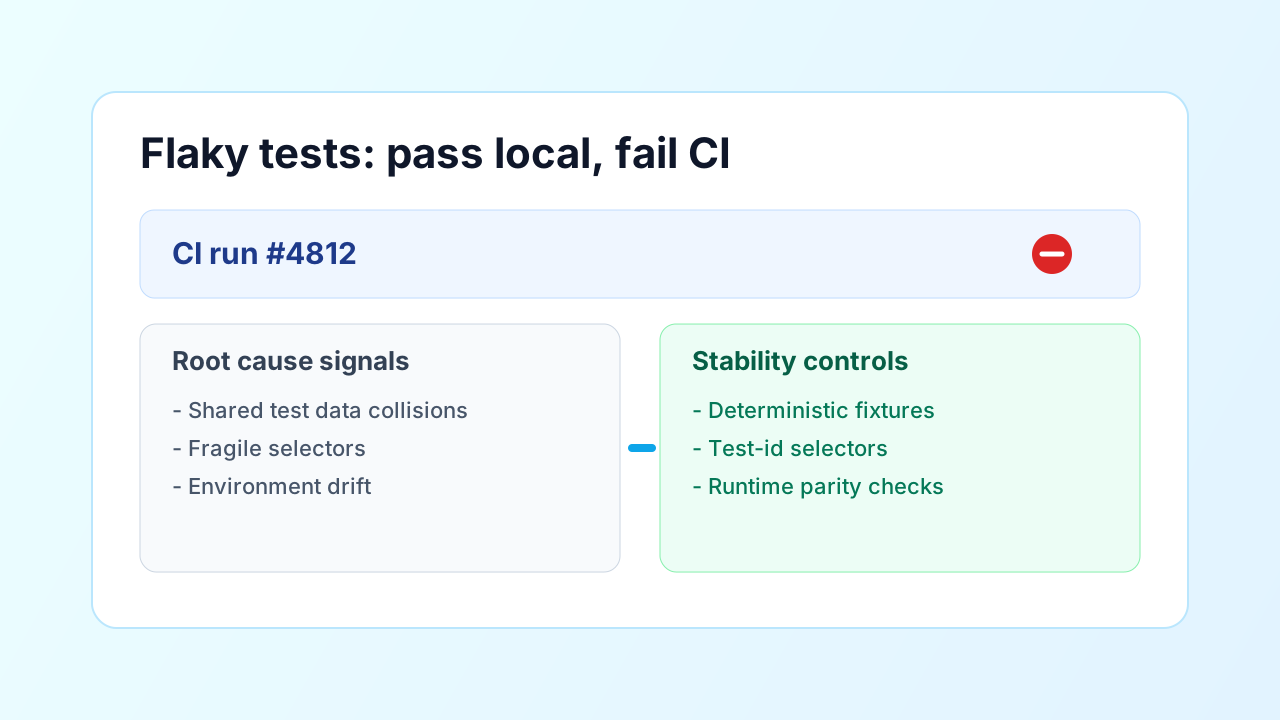
A test fails in CI and passes on re-run without code changes.
Developers merge with red pipelines because failures are assumed to be noise.
The suite runtime increases because retries are covering instability instead of fixing it.
Nobody can explain if a failing test is product behavior, environment drift, or bad test design.
Tests depend on records created by other tests, so order and timing change outcomes.
Fragile selectors tied to CSS or position break whenever UI structure changes.
Different runtime, timezone, seed data, or service mocks produce different behavior.
Retry settings mask instability, making the suite look green while quality degrades.
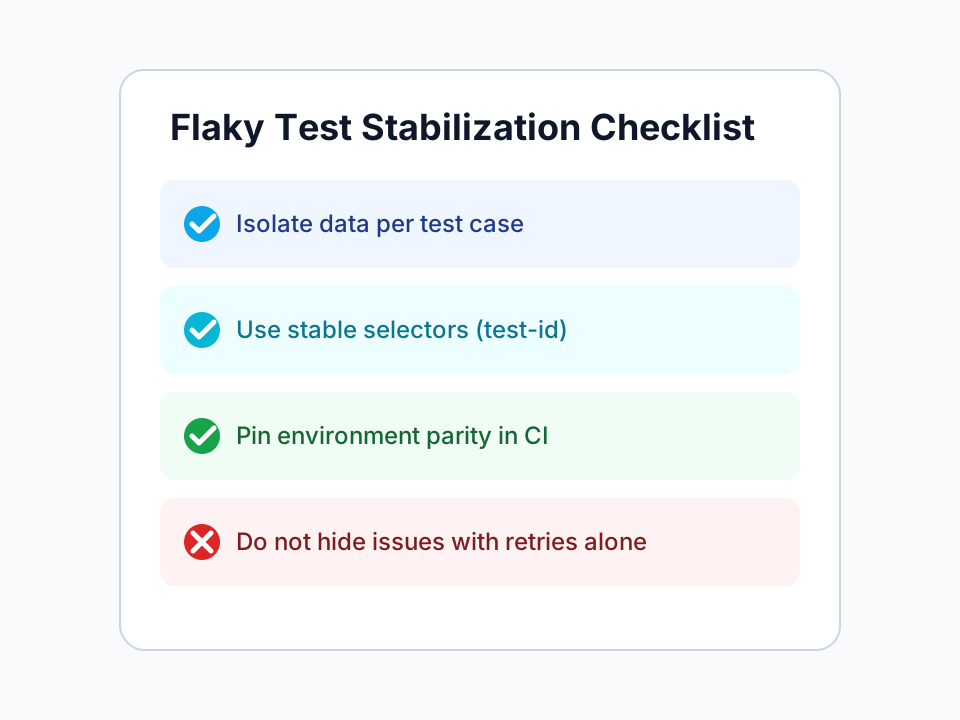
Create test fixtures per test case and clean up deterministically instead of reusing shared accounts or records.
Prefer explicit test IDs and assertion-based waits over timing-based delays.
Pin versions, locale, timezone, and service mocks to remove cross-environment uncertainty.
Tag flaky tests, assign owners, and enforce a policy that quarantined tests are fixed quickly.
Most teams do not need more tooling. They need clearer execution order, stable patterns, and ownership around reliability.
Start by classifying each flaky test: data contamination, selector instability, async timing, environment drift, or third-party dependency.
Without categories, teams fix symptoms. With categories, teams remove classes of failures and reduce maintenance cost permanently.
Week 1: isolate top failing tests, remove hard waits, and enforce data ownership per test. Week 2: lock runtime parity and establish flaky-test ownership metrics.
This creates a visible baseline where green checks are trustworthy and release decisions become faster.
If these issues are affecting delivery speed or release confidence, we can map a practical execution plan for your setup.
Quarantine them with owner and deadline. Never silently disable them without visibility, or your coverage erodes without anyone noticing.
Use retries only as a temporary safety net. If retry dependence increases, treat it as a reliability incident and fix root causes.
Yes. Start with high-failure tests and high-value journeys. Most teams can get major stability gains with targeted refactoring and data isolation.
If feedback arrives after context is lost, quality drops. This page shows how to restore fast, trusted pipeline flow.
If one person owns all framework knowledge, delivery risk grows every sprint. This page shows how to reverse that.
If environment drift keeps invalidating results, your tests are not the main problem. This page explains the fix.