Tight coupling across layers
Test intent, selectors, data setup, and environment assumptions are mixed in the same files.

If one person owns all framework knowledge, delivery risk grows every sprint. This page shows how to reverse that.
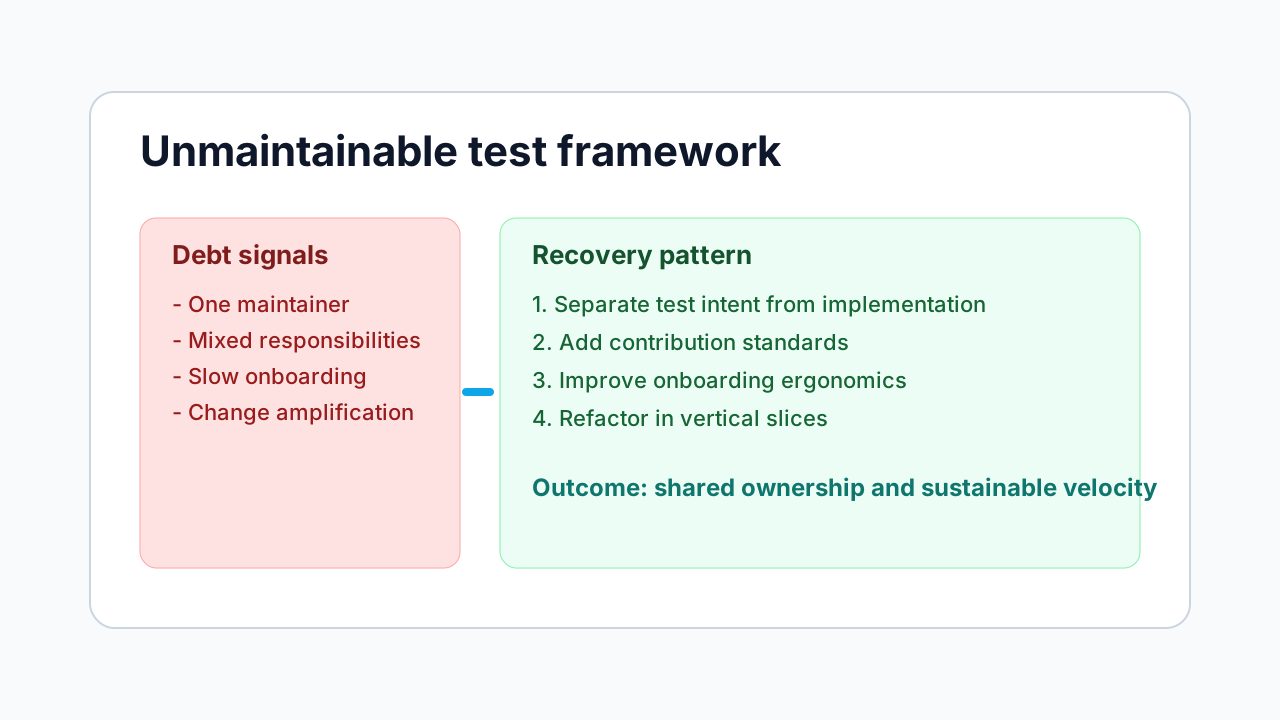
Only one engineer can debug framework failures quickly.
New hires avoid touching test code because it feels too risky.
Simple UI changes require broad test rewrites.
Framework debt grows silently while delivery teams lose confidence.
Test intent, selectors, data setup, and environment assumptions are mixed in the same files.
Framework changes happen ad hoc, with no standards or quality gates for contribution.
Engineers cannot learn structure quickly, so only experts contribute confidently.
Teams keep adding tests to unstable foundations because delivery pressure always feels more urgent.
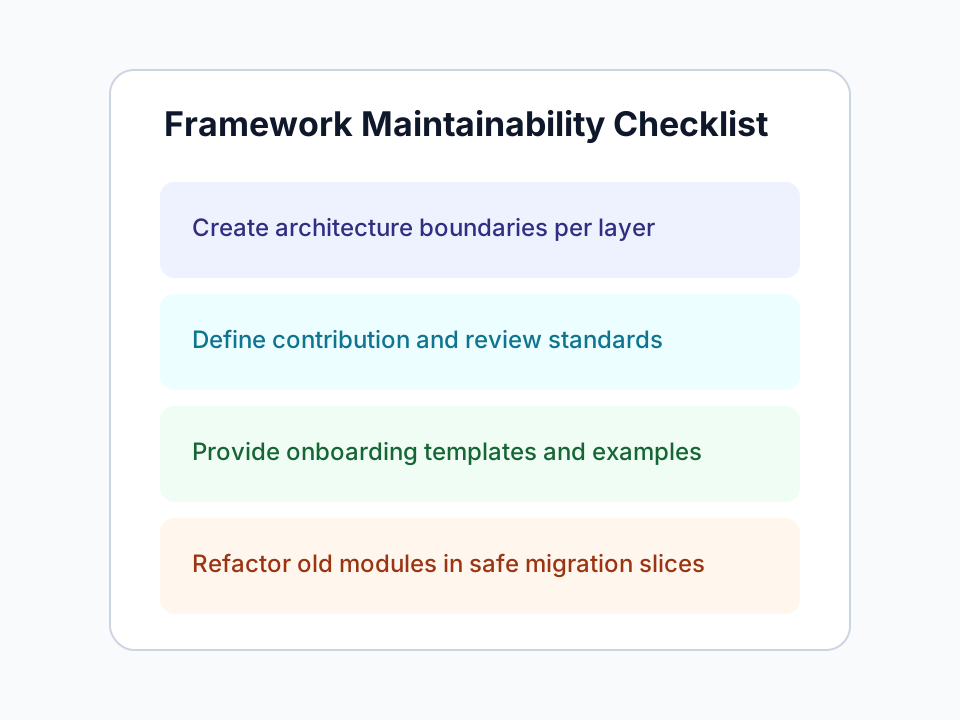
Use clear abstractions for page actions, API clients, and data factories so behavior changes do not ripple everywhere.
Add linting, naming conventions, review checklists, and architectural boundaries for framework code.
Provide guided structure, examples, and deterministic local run scripts so new contributors can succeed quickly.
Move module by module with compatibility wrappers, not full rewrites, to protect ongoing delivery.
Most teams do not need more tooling. They need clearer execution order, stable patterns, and ownership around reliability.
High change amplification, flaky ownership, and steep onboarding curves are early warnings that framework architecture is becoming a delivery bottleneck.
Measure these signals explicitly to make framework health visible to engineering leadership.
Prioritize high-value critical paths first, enforce new standards immediately, and migrate legacy modules progressively.
This preserves release cadence while steadily reducing maintenance burden.
If these issues are affecting delivery speed or release confidence, we can map a practical execution plan for your setup.
Most teams should refactor incrementally. Full rewrites often delay value and reintroduce the same design issues under delivery pressure.
You can usually improve developer confidence within weeks by enforcing standards and refactoring the most brittle paths first.
Yes. Use phased migration, clear module boundaries, and compatibility layers to avoid blocking feature delivery.
Tests pass locally, fail in CI, and nobody trusts the suite. This page shows how to stop the randomness.
If feedback arrives after context is lost, quality drops. This page shows how to restore fast, trusted pipeline flow.
If environment drift keeps invalidating results, your tests are not the main problem. This page explains the fix.